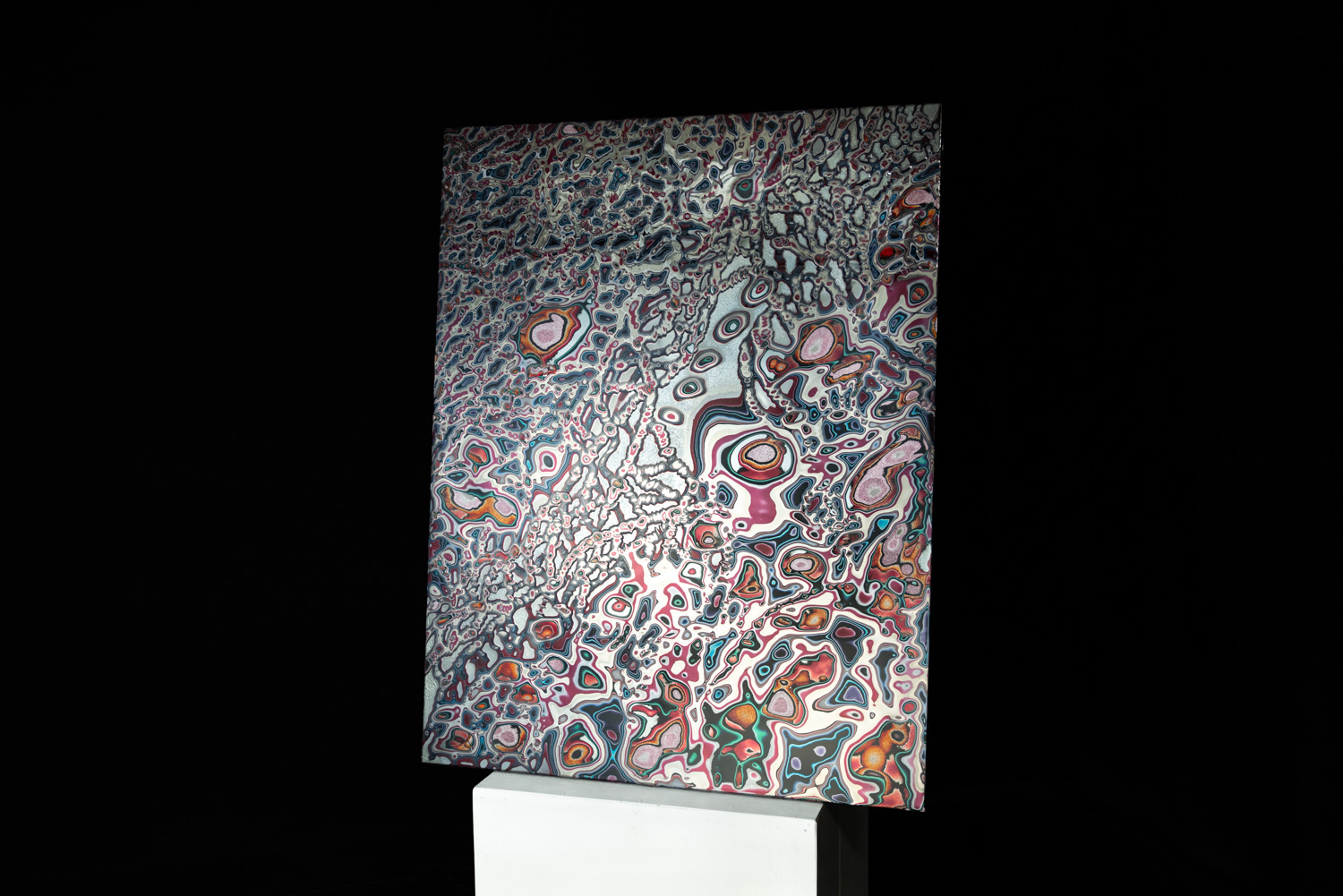
HAZE F50
This work imprints irreversible differences onto the surface of the painting, transforming it from a passive receptacle of light into a space that embodies both reflection and luminosity.
[ UNDULATION — Painting as an Optical Stratum ]
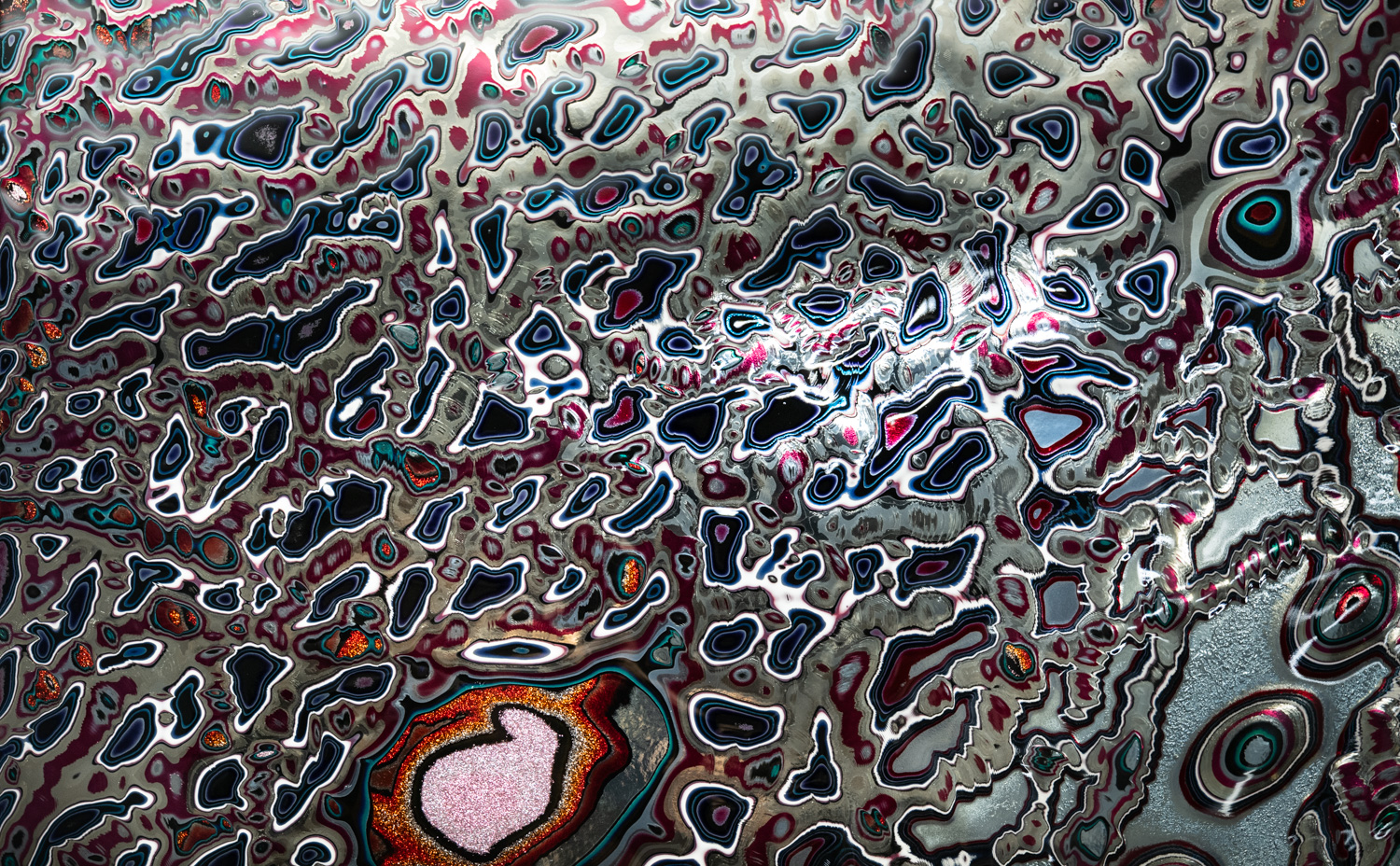
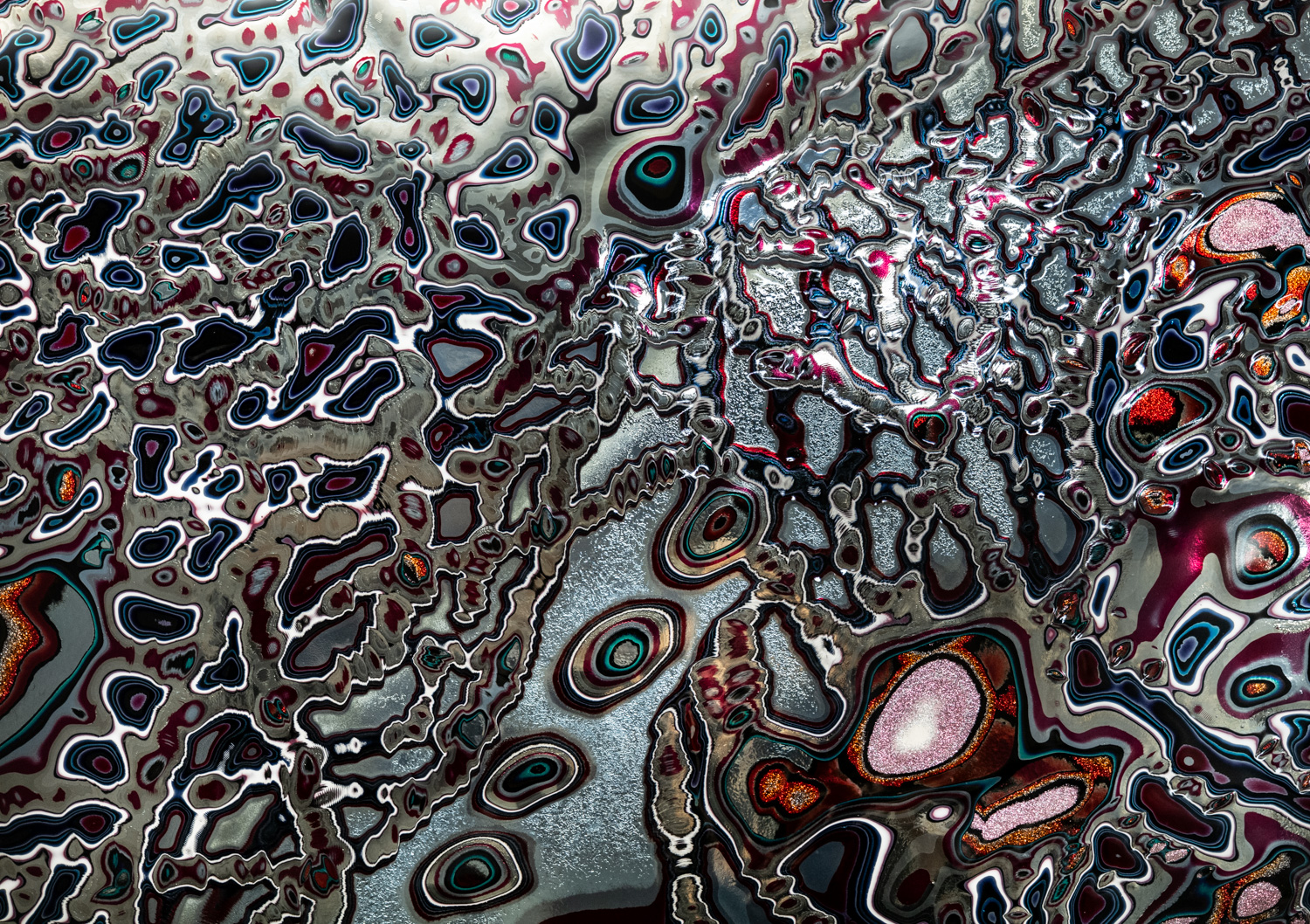
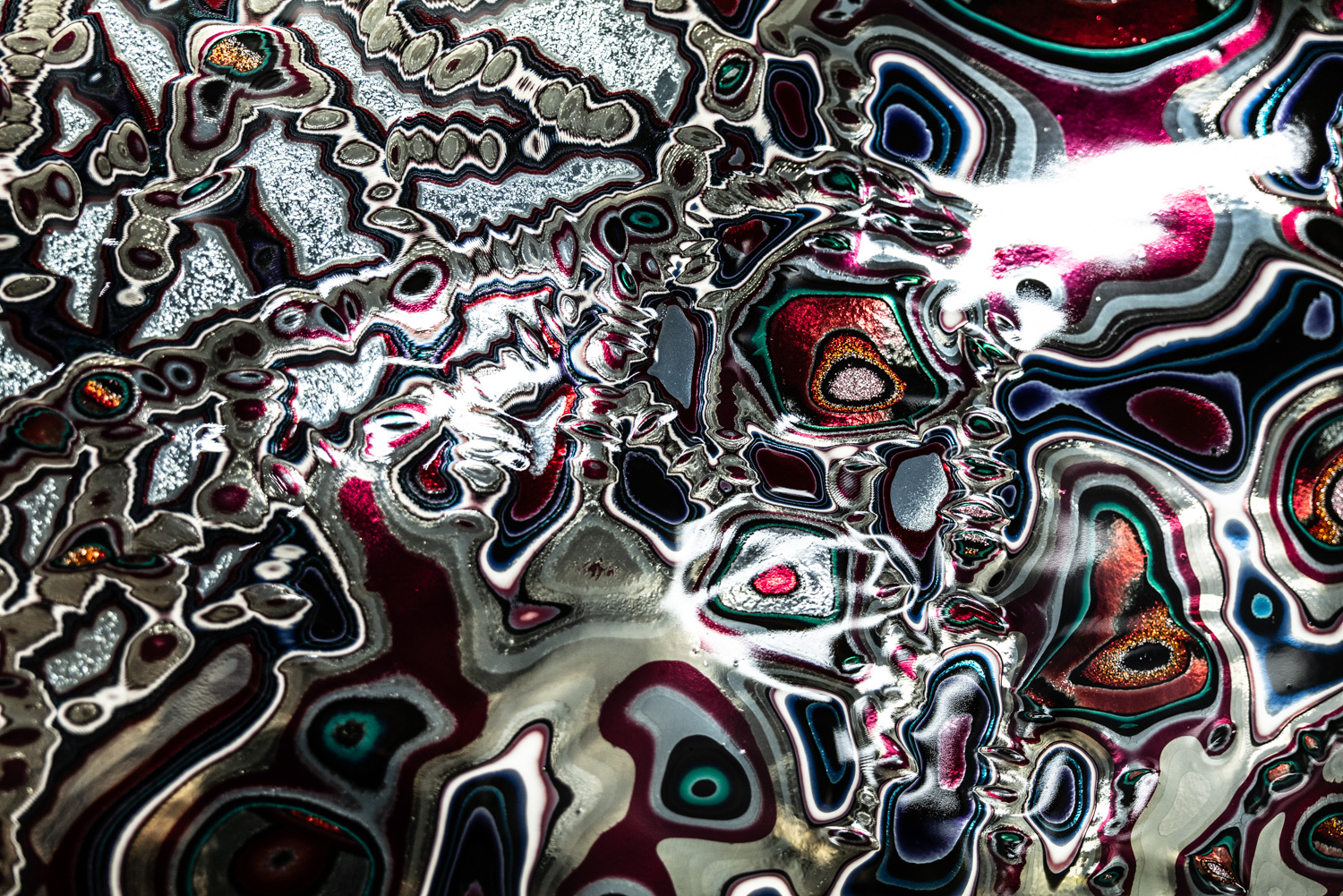
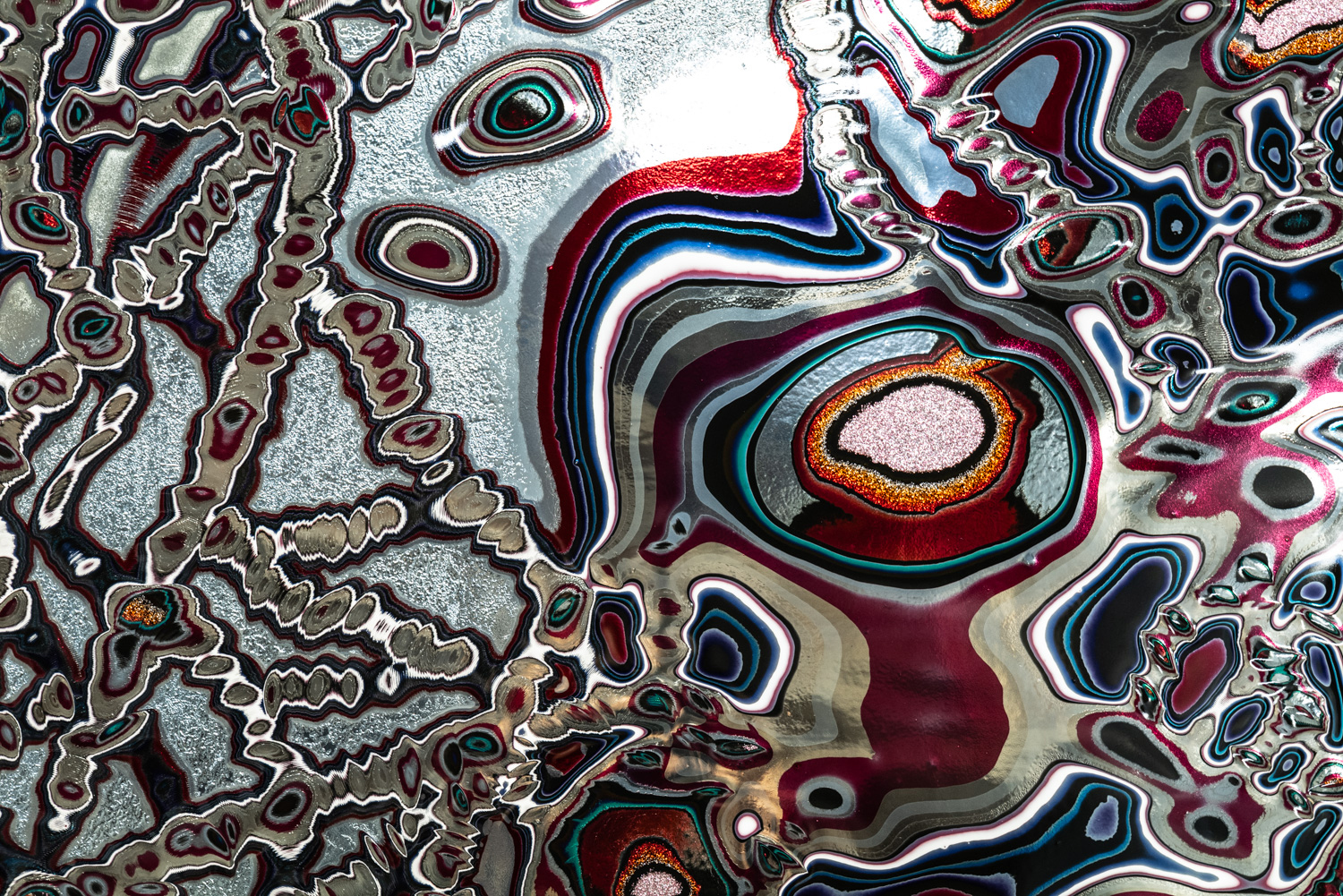
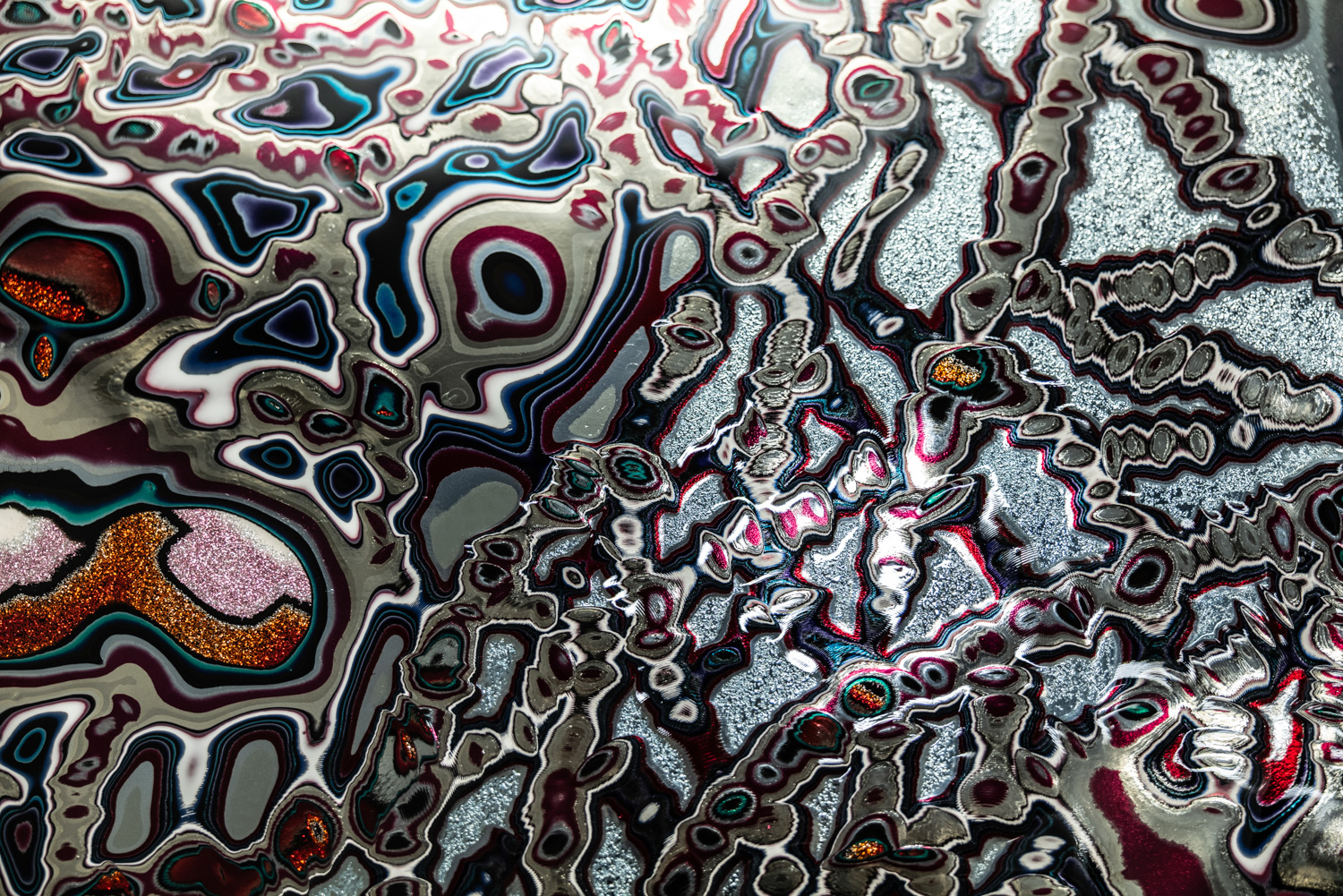
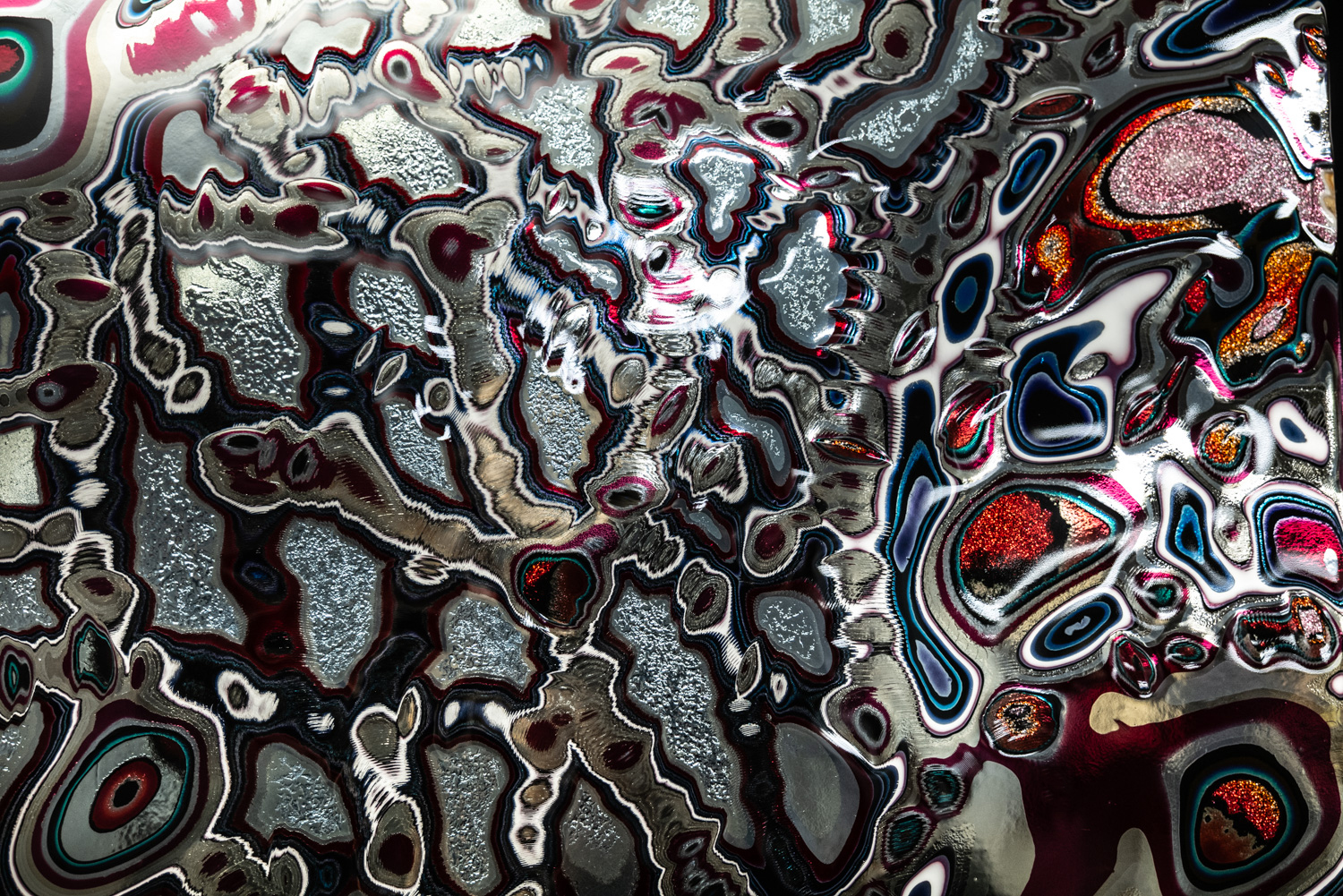
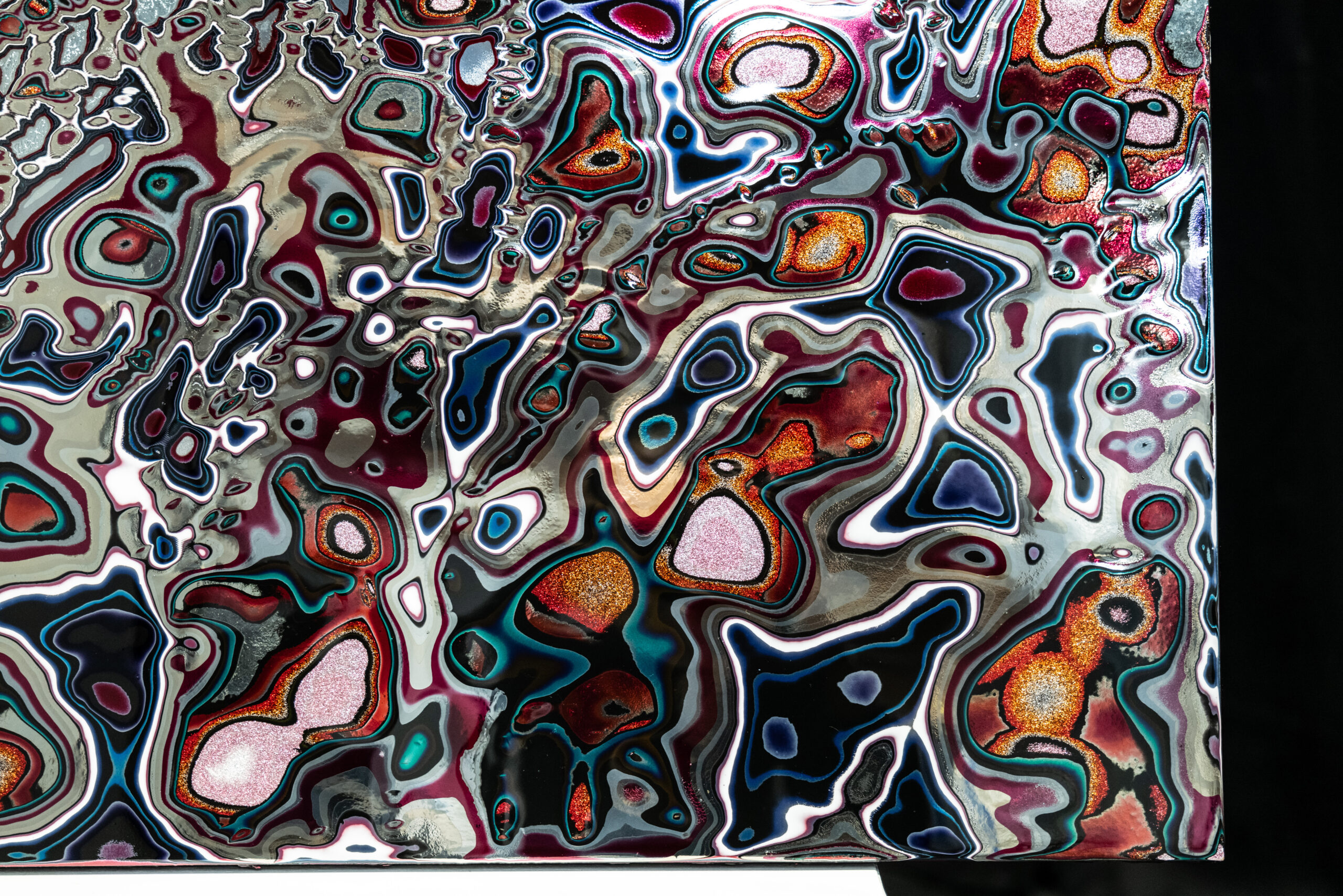
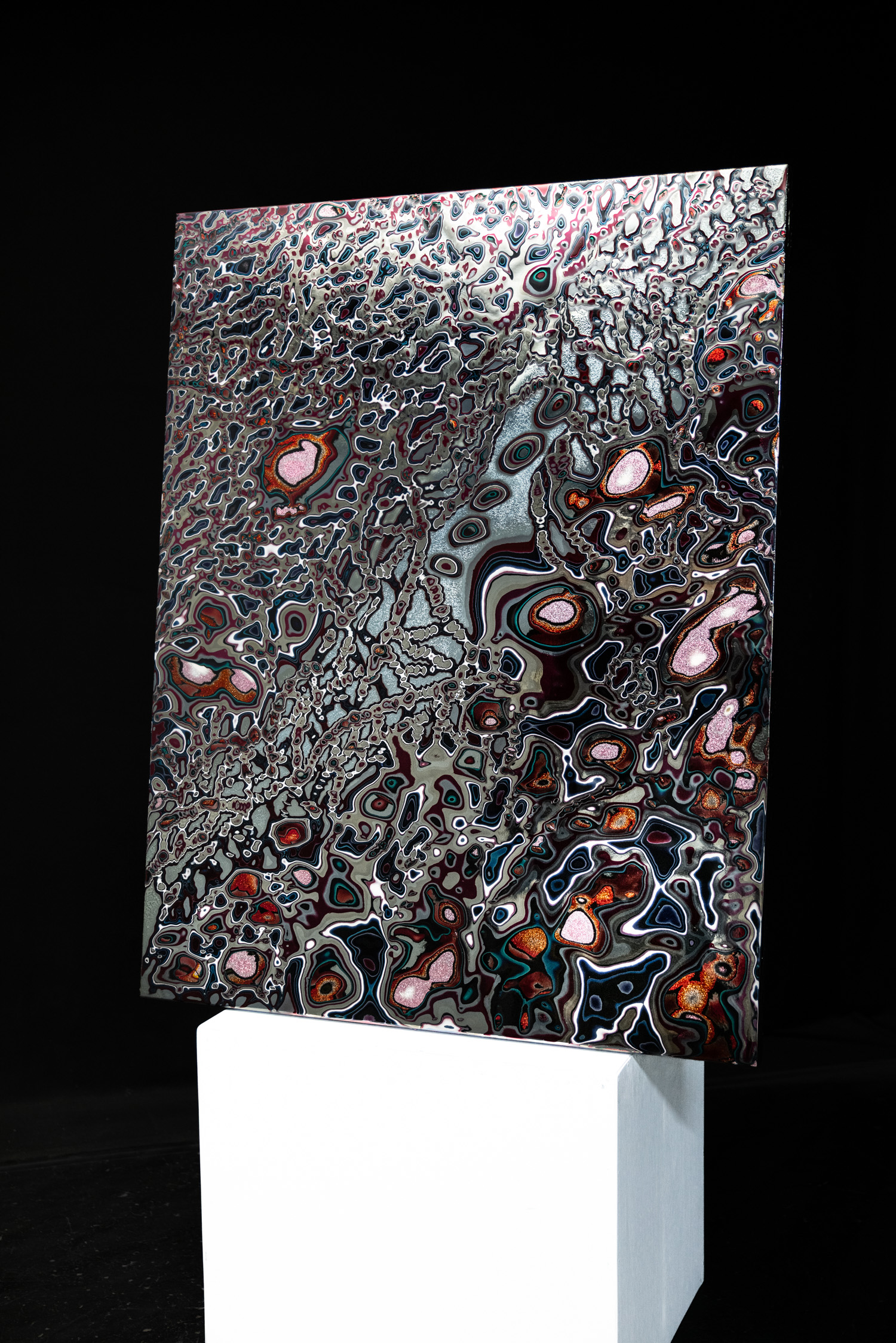
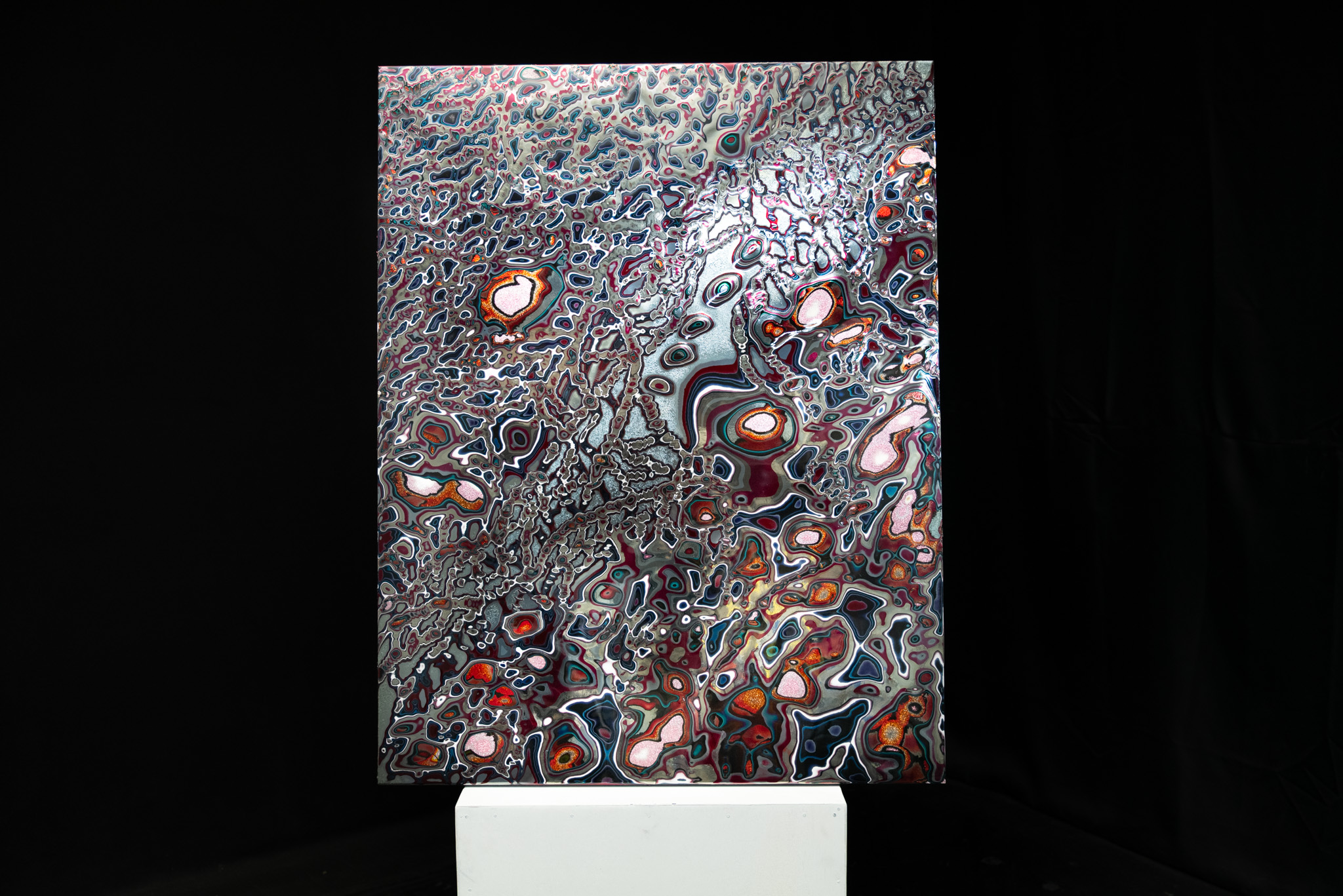
This work represents a new milestone in UNDULATION by Kwaika. On a wooden canvas—a support that naturally absorbs light—the artist applied 88 layers of paint, and within the middle layers, constructed multiple layers of a special silver coating primarily composed of nanosilver.The silver layers are not merely decorative. They serve as a reflective layer to draw light back into the painting and as an optical foundation that causes the colors to glow from within. Typically, color in a painting resides on the surface. However, in this work, color does not exist solely on the surface. It sinks beneath the silver, shines through the silver, and is exposed as a cross-section through the grinding process. In other words, color exists not as an image on a flat plane, but as time accumulated within the paint layers.
The creative process involves repeated cycles of painting, drying, forming reflective layers, applying multiple layers of candy-colored paint, and polishing with specialized tools. The result is a complex visual field reminiscent of mineral veins, cellular structures, liquid metal, and cosmic cross-sections. As the viewer moves, the silver and transparent layers reflect light, causing the work’s appearance to shift with the angle of view. Here, the painting becomes not a static image, but a material event that responds to light and perspective.
In art history, paintings have long been treated as “painted surfaces.” Abstract Expressionism liberated the entire canvas; mirror-based works emerging after Minimalism transformed spatial reflections into artworks; and the Light and Space tradition made light itself the object of perception. However, while this work draws on these contexts, it incorporates the mirror surface not as a final surface but as an internal structure of the painting.
Herein lies the [irreversible difference] inherent in this work.
An irreversible difference refers to a definitive change that, once it occurs, cannot be reversed to its previous state. In this work, the wooden canvas ceases to be merely a support; the mirror surface ceases to be merely a reflective surface; and color ceases to be merely a surface decoration. The painting is transformed from a plane that absorbs light into an “optical stratum” that accumulates, reflects, and re-emits light.
This work is not a display of special painting techniques. Nor is it merely an attempt to revitalize the surface of a painting. Rather, it is an act of exposing the institution of the “surface”—a concept long held as fundamental in painting—and subverting that conventional wisdom from within through the interplay of light, silver, color, and the depth of the paint layers. The viewer is not merely looking at a single painting here. They are witnessing a unique phenomenon where 88 layers of time, the reflection of silver, the luminescence of transparent colors, and the carved-out cross-sections intersect with the viewer’s own perspective.