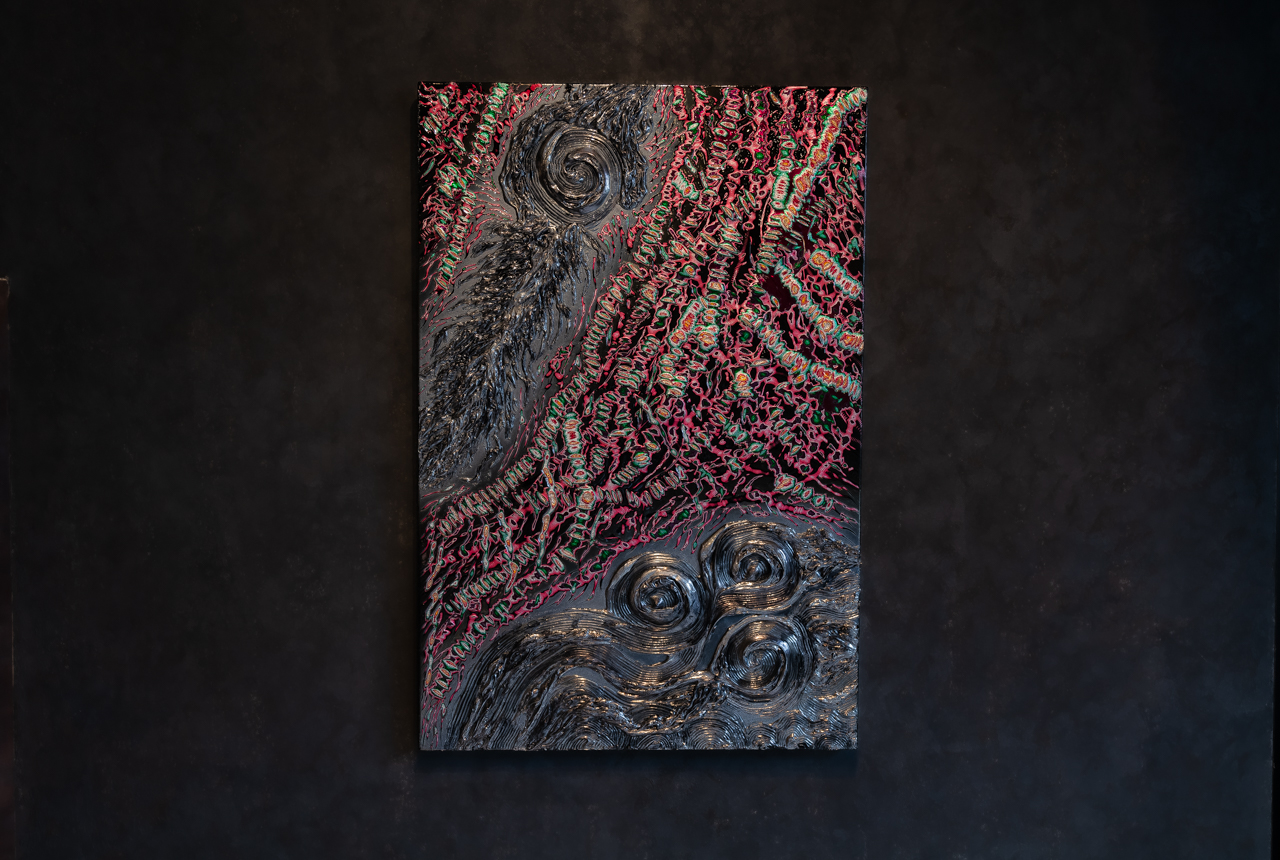
DRAGON Black Dragon M30
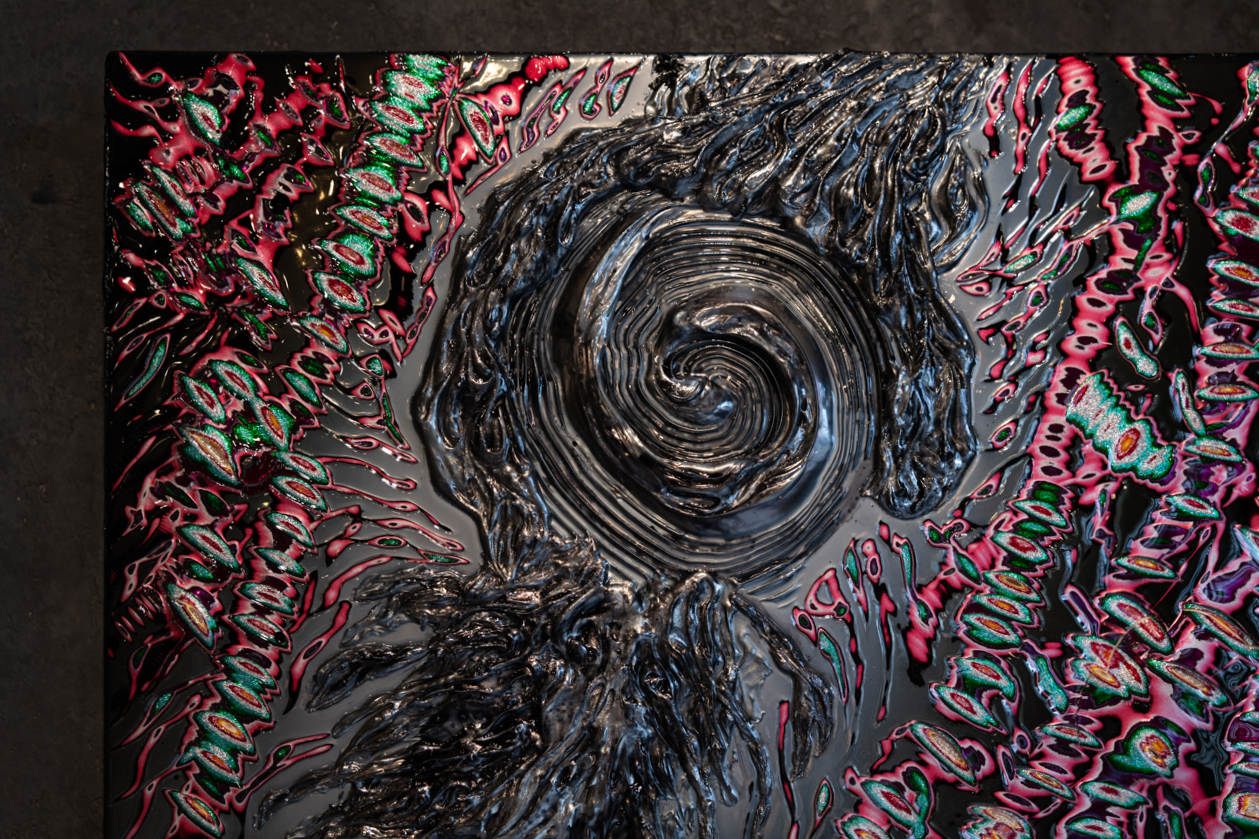
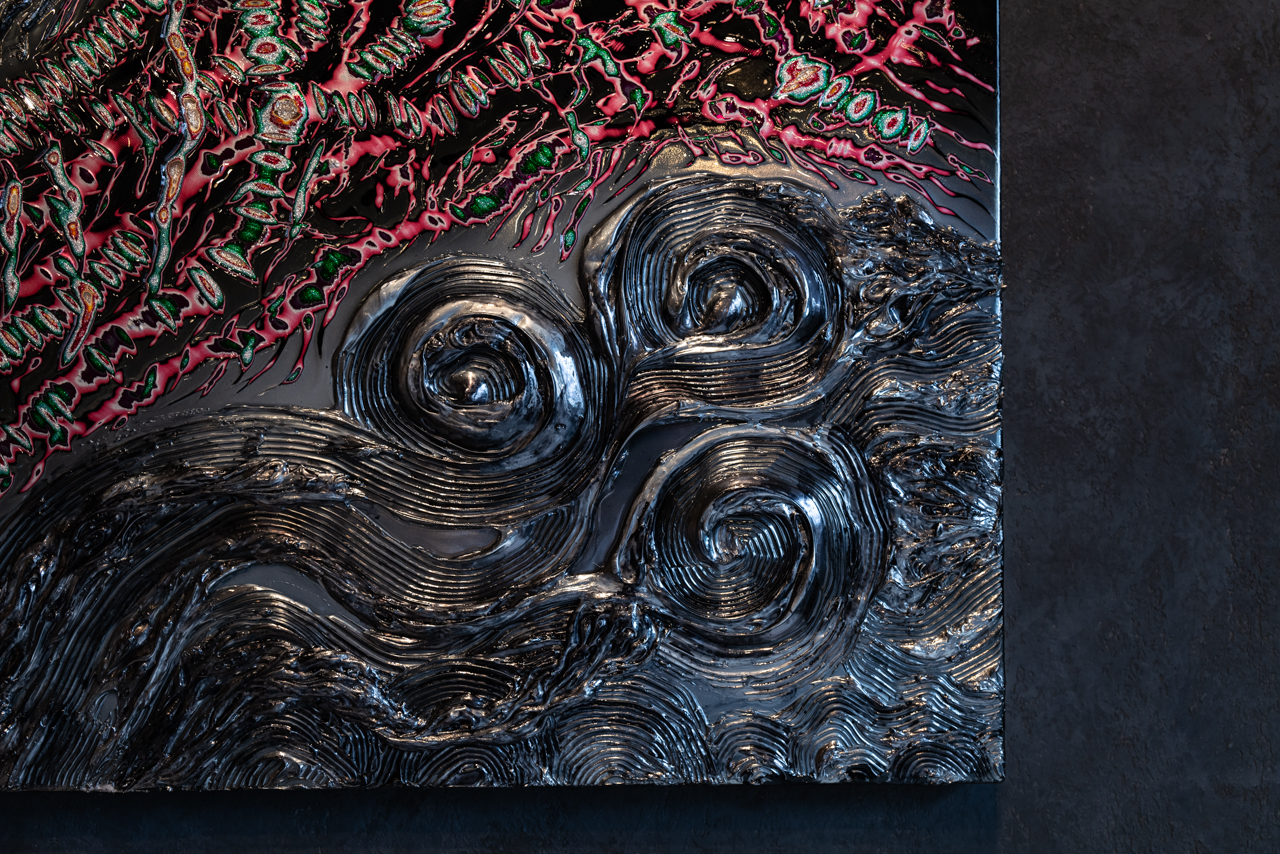
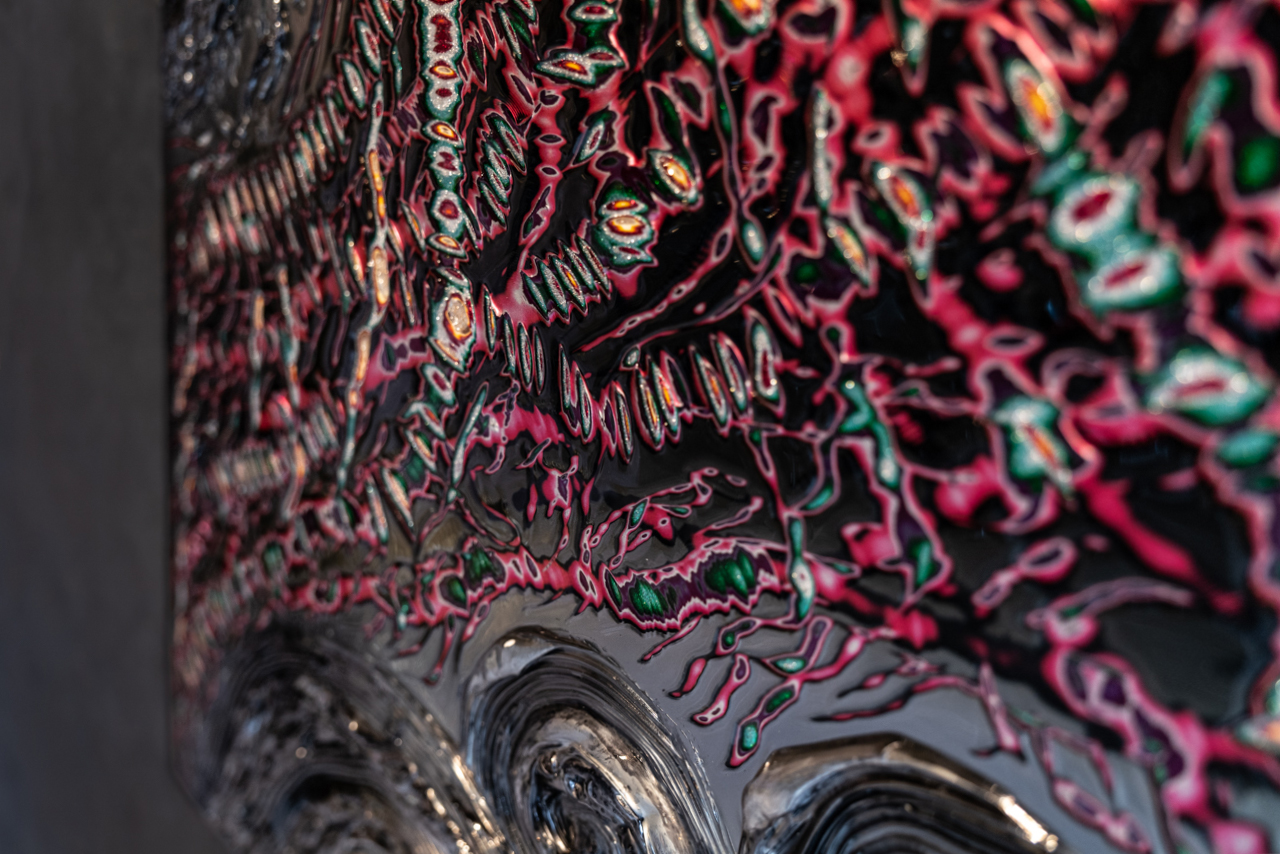
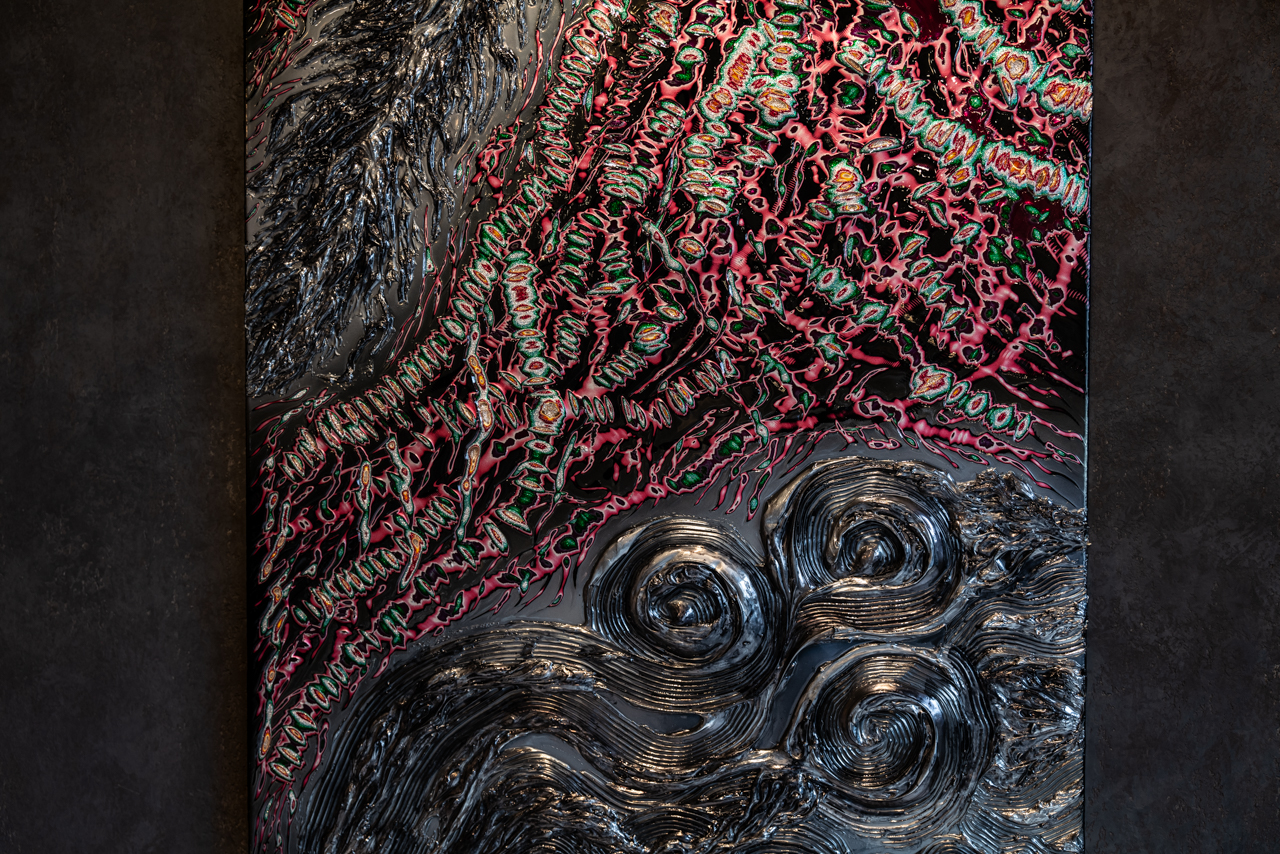
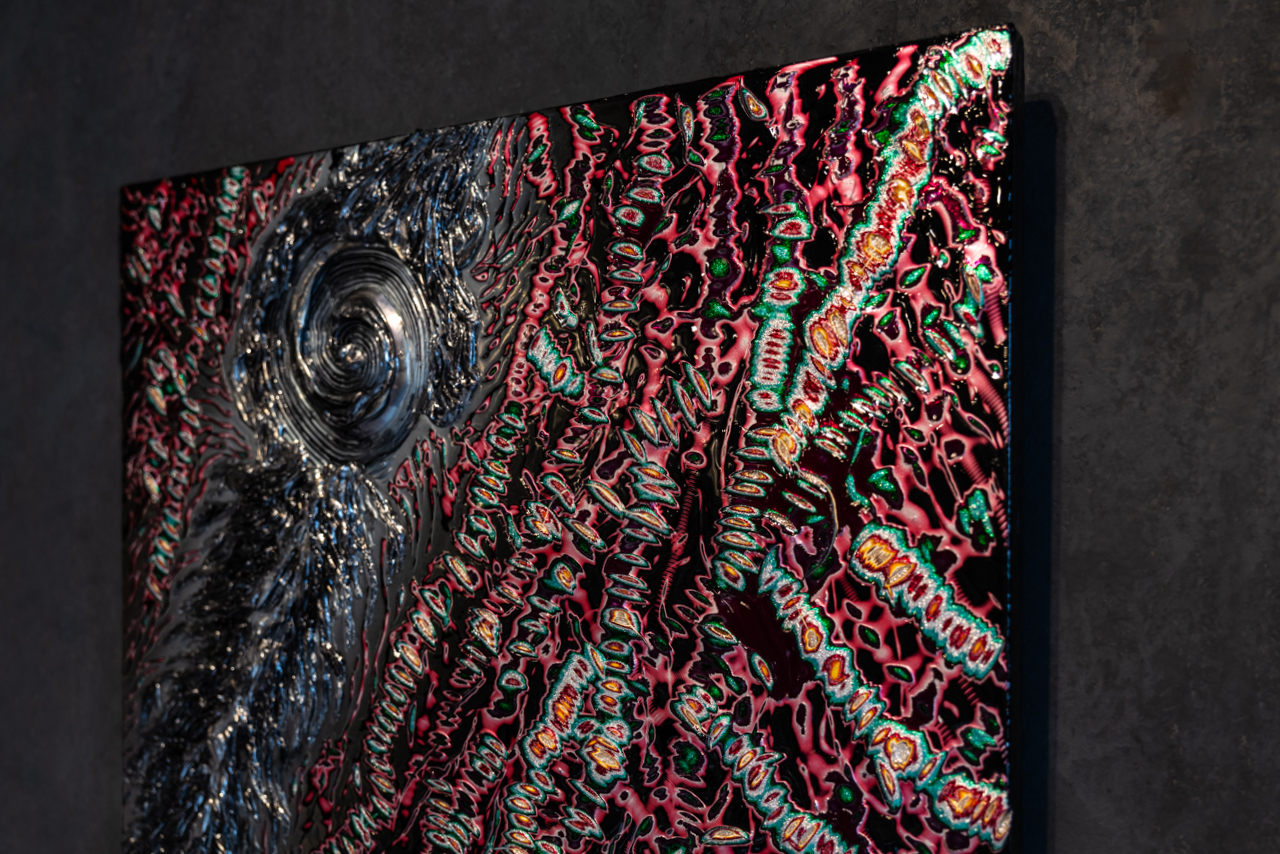
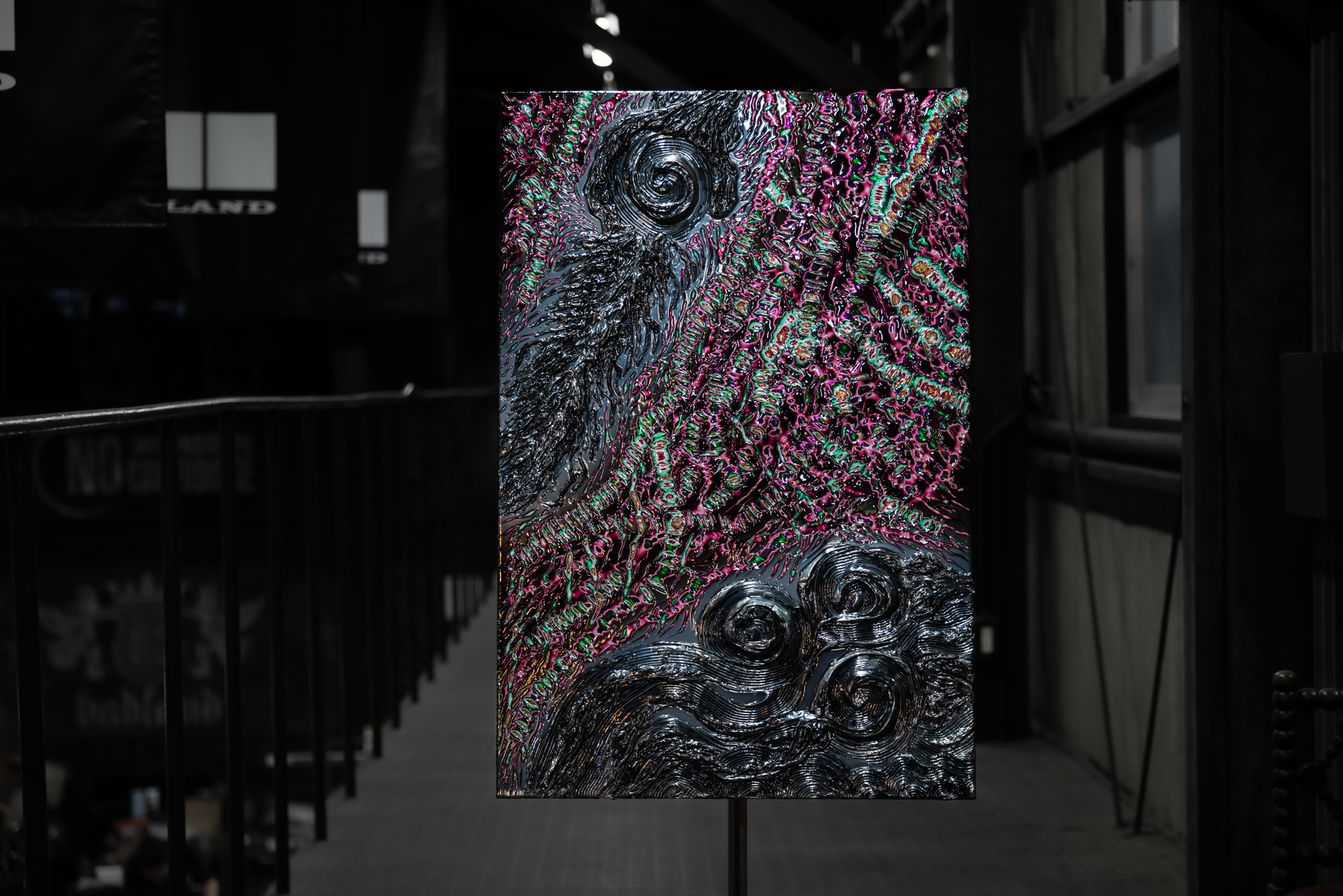
"Black Dragon," which brings to life the image of a dragon powerfully writhing in a deep, pitch-black space, is a work from UNDULATION’s DRAGON series that pushes the boundaries of presence and dynamism to the absolute limit.The layers of red and dark silver paint superimposed on the canvas create a powerful sense of tension and intensity, as if the very atmosphere were trembling from the dragon’s breath. The red embodies passion and vitality, while the dark silver conveys a sense of weight and metallic sharpness, highlighting the mystery and power of the dragon lurking within the pitch-black space.
What I sought to achieve with this work was not to depict the form of a dragon in concrete terms. Rather, it was to use color and the movement of the paint to visualize the atmosphere of that very moment—the instant when a gigantic life form, lurking in the depths of darkness, begins to stir and is about to rise.
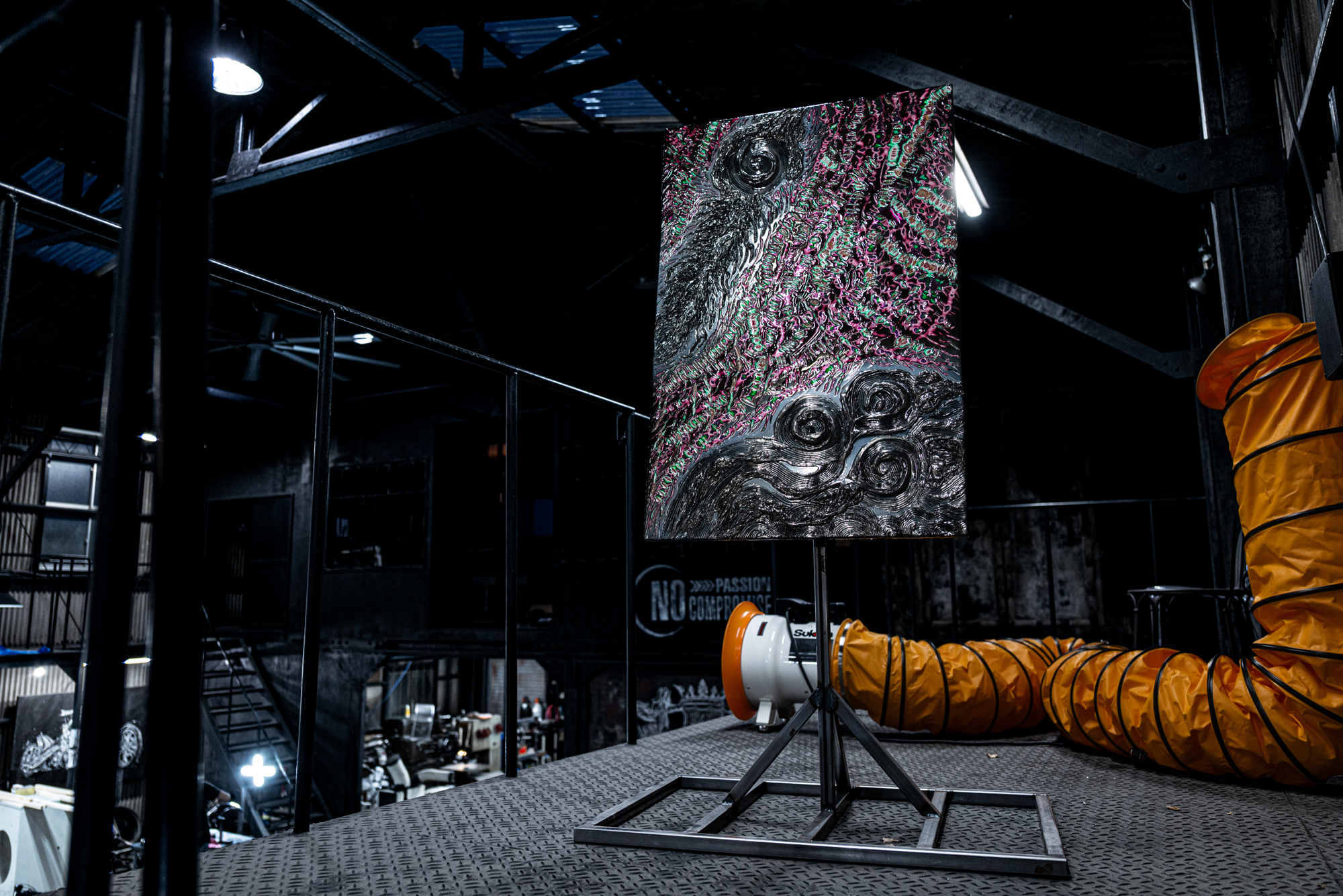
Placed within the space, “Black Dragon” maintains a sense of stillness while powerfully drawing the viewer’s gaze. This work brings together contrasting elements—strength and beauty, stillness and passion—within a single composition, structuring the tension and impulses that arise deep within me through the figure of the dragon.
Black Dragon M30
“Black Dragon” depicts the powerful emergence of a dragon writhing within a profoundly dark space. As part of UNDULATION’s DRAGON series, this work represents an extreme pursuit of presence, tension, and dynamic movement.
The layers of red and dark silver paint create an intense sense of tension and force, as if the dragon’s breath itself were causing the surrounding atmosphere to tremble. Red embodies passion and vital energy, while dark silver conveys weight, density, and a metallic sharpness. Together, they heighten the mystery and power of the dragon concealed within the depths of the blackness.
What I sought to achieve in this work was not a literal depiction of a dragon. Rather, through the movement of color and layers of paint, I wanted to reveal the presence of an immense life force hidden deep within the darkness—the precise moment when it begins to stir and rise.
When placed within a space, “Black Dragon” exudes a profound stillness while powerfully drawing the viewer’s gaze. Strength and beauty, silence and passion—these contrasting qualities coexist within a single pictorial field. Through the figure of the dragon, the work gives form to the tension and impulse that arise from within me.